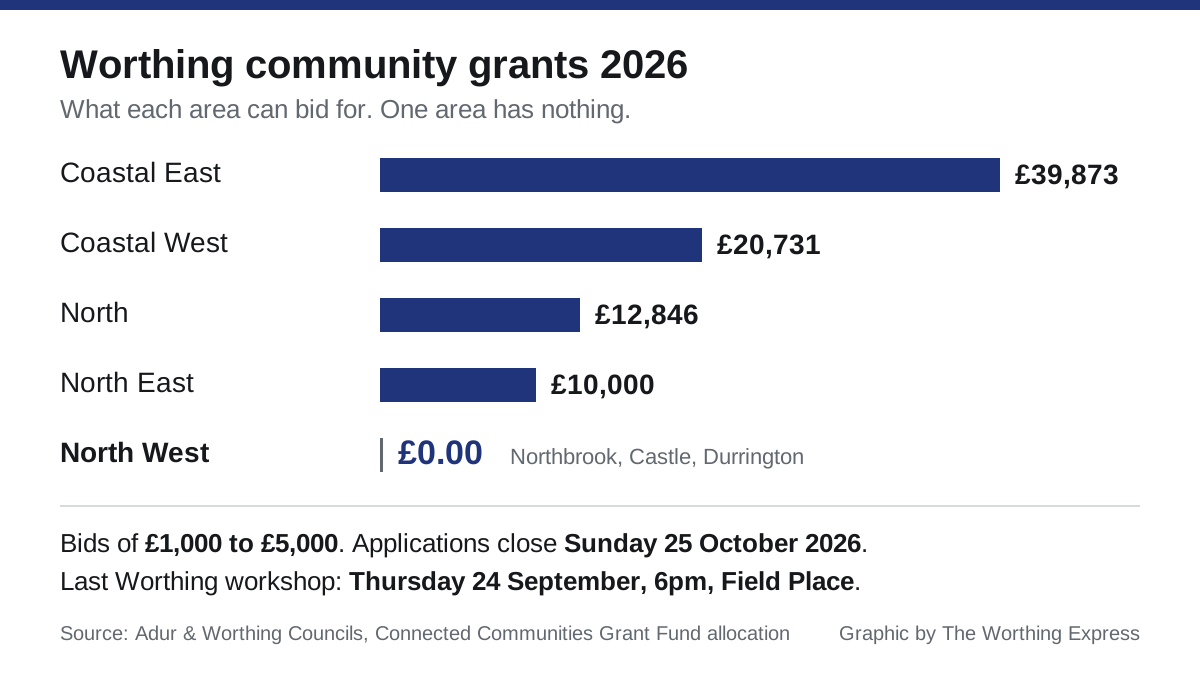

Worthing North West gets £0.00 from the new £121,000 Connected Communities fund, while Coastal East gets £39,873. Bids of £1,000 to £5,000 close 25 October.
Community groups in one part of Worthing have nothing to bid for this year. The councils’ new Connected Communities Grant Fund opened on 14 September with £121,000 across Adur and Worthing. The money is split by area, and the allocation published on the councils’ own fund page gives Worthing North West £0.00.
North West covers the Northbrook, Castle and Durrington wards. A group based there can still apply, but only for a project delivered in an area that has money.
The deadline for every area is Sunday 25 October. The last networking workshop is in Worthing this Thursday 24 September.
What each area has
The councils publish the figures to the penny, then say public communications will round them to the nearest £1,000. These are the published amounts:
- Worthing Coastal East (Heene, Central, Selden): £39,873.27
- Worthing Coastal West (Marine, Goring): £20,730.94
- Worthing North (Tarring, Gaisford, Salvington): £12,845.89
- Worthing North East (Broadwater, Offington): £10,000.00
- Worthing North West (Northbrook, Castle, Durrington): £0.00
- Adur, Lancing and Sompting: £12,664.00
- Adur, Shoreham: £12,664.00
- Adur, Southwick and Fishersgate: £12,664.00
That is £83,450.10 for Worthing and £37,992 for Adur. Worthing’s five areas exclude any part covered by the South Downs National Park Authority, and so do Adur’s three.
Why one area gets nothing
The Worthing money is not council revenue. It is the Community Infrastructure Levy neighbourhood share, the slice of the developer charge that goes back to the area where building happened.
The councils’ page is explicit about the mechanism. The amount available depends on CIL receipts from liable developments “which have commenced work in a CIL area during the last financial year”, and for 2026 those areas were Coastal East, Coastal West and North. No development started in North West, so there are no receipts to share.
North East’s £10,000 is not CIL at all. The page says it comes from previous Community Transport Grant funding for Worthing.
Adur works differently again. Its share comes from income from textile recycling, split evenly three ways, which is why its three areas each get exactly the same figure.
The same page explains that in the absence of parishes and neighbourhood plans, which is the position in Worthing, the CIL regulations let the council design its own definition of a neighbourhood area. Worthing has grouped wards into areas since 2023. More on how development charges work locally is on our Worthing planning news page.
The councils say pooling fixes exactly this
The press release announcing the fund does not mention the area splits or the zero. It does say the pooling is meant to help in this situation.
Pooling the grants, it says, will “provide greater flexibility to support areas where there may be less access to funding in a particular year, as can be the case with the Worthing CIL Neighbourhood Fund”. On the 2026 figures, that flexibility has not reached North West.
Councillor Dom Ford, Worthing’s cabinet member for communities, culture and leisure, said the change would “help make applying for funding from us much simpler for groups”. He added that other funds may be added to the pot from next year.
What it means for you
If you run a group in Worthing, the area your project takes place in decides what you can bid for, not the area your group is based in.
- Bids are for £1,000 to £5,000, for one-off project costs only.
- Applications run to Sunday 25 October 2026.
- A local panel of ward councillors, officers and community representatives scores bids in November and December.
- The relevant cabinet member signs off in January 2027, and everyone gets feedback.
- You must spend the money and finish within twelve months of receiving it, so permissions need to be in place first.
To apply you need a constitution or governing rules, accounts or records of expenditure, a bank account or a partner organisation to hold the money, relevant policies such as safeguarding and insurance, and the ability to sign a UK Subsidy Form.
The councils say they are particularly interested in projects supporting children and young people, and projects that build climate resilience. They will not fund retrospective costs, political activity, projects that only benefit animals, projects solely for religious purposes without wider community benefit, or one-off events unless there is lasting impact.
The last of the in-person sessions is a workshop on Thursday 24 September, 6pm to 7.30pm, in the Chichester Room at Field Place, Worthing. Sign-up is through the link on the fund page. Questions go to neighbourhood@adur-worthing.gov.uk.
Sources: Connected Communities Grant Fund, Adur & Worthing Councils, page last updated 15 September 2026; Applications open for Adur & Worthing Councils’ new Connected Communities fund (PR26-080), released 15 September 2026.
Have your say